



Looking to ship something too large, heavy, or oddly shaped to fit inside a standard container? You’re probably wondering how cargo like turbines, steel beams, or heavy machinery actually moves across the ocean. The answer is break-bulk cargo. In this guide, you’ll learn what it means, the main types, and real examples explained in plain English. As a trusted Freight forwarding Company in Dubai, we handle this kind of cargo every day.
Many businesses assume everything ships in containers, but that simply isn’t true. Some goods are just too big. That’s where break bulk shipping comes in, and working with experienced Freight forwarders in Dubai makes the whole process smoother, safer, and more cost-effective.
What Is Break Bulk Cargo?
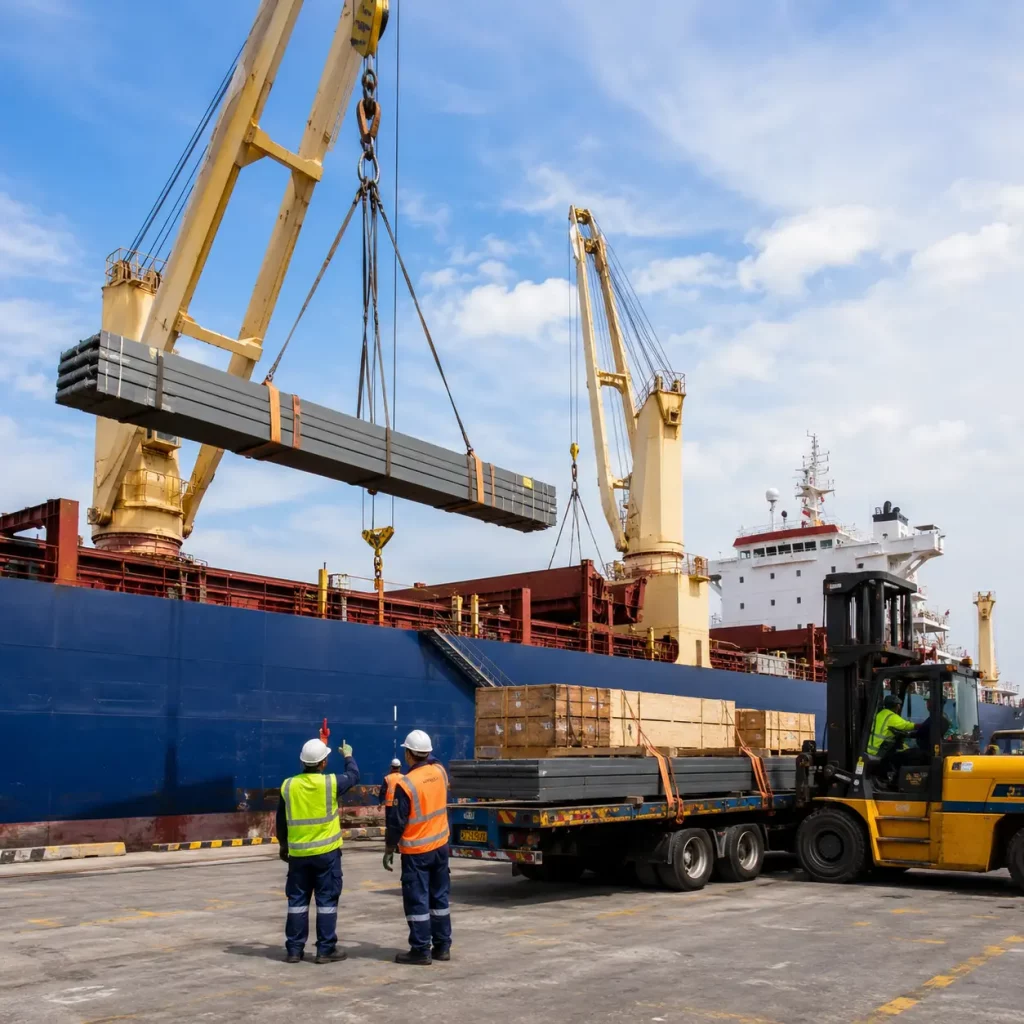
Break-bulk cargo refers to goods that are loaded individually onto a ship rather than inside shipping containers. Each item like a crate, drum, barrel, or piece of machinery is handled, stowed, and secured separately. The name comes from “breaking” the bulk, meaning the cargo is divided into manageable pieces instead of being packed together as one unit.
Unlike container shipping or dry bulk (such as grain or coal poured loose into a hold), break bulk sits in between. The items are separate, packaged, and often very large. They are lifted aboard using cranes, slings, or specialized equipment.
This shipping method has existed for centuries. Before containers became common in the 1950s, almost all cargo moved as break bulk.
Why Is Break Bulk Cargo Still Used Today?
Even with modern containers, break-bulk remains essential. Here’s why:
- Oversized loads won’t fit in standard containers.
- Heavy machinery needs flat racks or open decks.
- Project cargo like wind turbines requires custom handling.
- Remote ports may lack container-handling infrastructure.
For industries such as construction, oil and gas, and energy, break bulk is often the only practical choice. A proper custom clearance company in Dubai also supports these shipments to be compliant and move without costly delays.
Types of Break Bulk Cargo
Break-bulk cargo comes in several forms. Below are the most common types you’ll encounter.
1. Unitized Cargo
This is cargo grouped into single units for easier handling. Examples include palletized boxes, bundled steel, or strapped lumber. Grouping items reduces loading time and lowers the risk of damage.
2. Loose Cargo
Loose cargo includes individual items not bundled together such as machine parts, vehicles, or large drums. Each piece is loaded one at a time.
3. Heavy-Lift Cargo
These are extremely heavy items, often weighing several tons. Think transformers, generators, or industrial boilers. Specialized cranes and reinforced vessels handle them.
4. Project Cargo
Project cargo refers to large, complex shipments tied to a single project. A good example is shipping all the parts for a power plant or factory. These require detailed planning and coordination.
Real Examples of Break Bulk Cargo
To make this clearer, here are practical examples seen in everyday shipping:
- Steel products: beams, pipes, rods, and coils
- Construction equipment: bulldozers, cranes, excavators
- Wind energy parts: turbine blades and towers
- Industrial machinery: engines, pumps, and presses
- Vehicles and boats: yachts, trucks, and trailers
- Timber and lumber: bundled wooden planks
These goods share one thing in common: they can’t easily fit or function inside a sealed container.
How Does Break Bulk Shipping Work?
The process follows clear steps from start to finish:
- Packaging Goods are crated, bundled, or strapped for protection.
- Documentation: Shipping papers and customs forms are prepared.
- Loading: Cranes or forklifts move cargo onto the vessel.
- Securing: (lashing) Items are tied down to prevent shifting at sea.
- Transit: The vessel sails to the destination port.
- Unloading: Cargo is carefully lifted off and delivered.
Each step needs skilled handling. A small mistake during lashing or loading can lead to damage or safety risks. This is why partnering with experts in Break Bulk Cargo in Dubai is so valuable.
Break Bulk Cargo vs. Container Cargo
Understanding the difference helps you choose the right method.
| Feature | Break Bulk Cargo | Container Cargo |
| Packaging | Crates, drums, bundles | Sealed containers |
| Size limit | No fixed limit | Standard sizes only |
| Handling | Item by item | Whole container |
| Best for | Oversized, heavy goods | Regular, uniform goods |
| Loading speed | Slower | Faster |
In short, container shipping suits standard products, while break-bulk suits unusual, heavy, or oversized loads.
Advantages of Break Bulk Shipping
Break bulk offers clear benefits:
- Flexibility to ship items of almost any size or shape
- Access to ports without container facilities
- No need to disassemble large equipment
- Direct handling that suits project-based logistics
These strengths make it a reliable option for specialized cargo.
Challenges to Keep in Mind
Of course, break bulk also has a few downsides:
- Higher labor costs due to individual handling
- Longer loading and unloading times
- Greater damage risk if not secured properly
- More documentation and planning needed
The good news? Most of these challenges disappear when you work with a skilled logistics partner who knows the ports, paperwork, and proper handling methods.
Why Choosing the Right Partner Matters
Break bulk shipping isn’t just about moving cargo it’s about doing it safely, legally, and on time. Experienced handlers know how to plan routes, secure loads, and clear customs without delays.
If you’re searching for reliable break-bulk freight forwarders, look for a team with proven experience, the right equipment, and strong port connections. The right partner saves you money and protects your cargo from start to finish.
Final Thoughts
Break bulk cargo plays a vital role in global trade. It moves the heavy, oversized, and complex goods that keep industries running from energy and construction to manufacturing. While it requires more planning than container shipping, the flexibility it offers is unmatched for specialized loads.
If you need to ship large or unusual cargo, understanding these basics puts you in a stronger position. And with the right logistics partner by your side, the entire process becomes simple, safe, and stress-free.
Frequently Asked Questions
What is break-bulk cargo in simple words?
Break-bulk cargo means goods shipped as separate pieces like crates, drums, or machinery instead of inside sealed containers. Each item is loaded onto the vessel individually.
What is an example of break-bulk cargo?
Common examples include steel beams, wind turbine blades, heavy machinery, construction equipment, and vehicles. These are too large or oddly shaped for standard containers.
What is the difference between break-bulk and bulk cargo?
Bulk cargo is loose material like grain, coal, or oil poured directly into the ship’s hold. Break bulk cargo is packaged into separate units such as crates, bundles, or pallets.
Is break-bulk cargo cheaper than containers?
Not always. Break bulk can cost more in labor and handling. However, for oversized or heavy goods that don’t fit in containers, it’s often the most practical and affordable option.
What ships carry break bulk cargo?
General cargo ships, multipurpose vessels, and heavy-lift ships carry break bulk. These vessels have open decks and onboard cranes designed for large or heavy items.