




If you’ve been shipping from Dubai to Saudi Arabia for a while, you’ve probably heard the word SABER come up, especially when a shipment gets held at the border. But what exactly is it, and why does it matter so much for your cargo?
This guide breaks it down simply so you know exactly what to expect before your next shipment leaves Dubai.
What is SABER Certification?
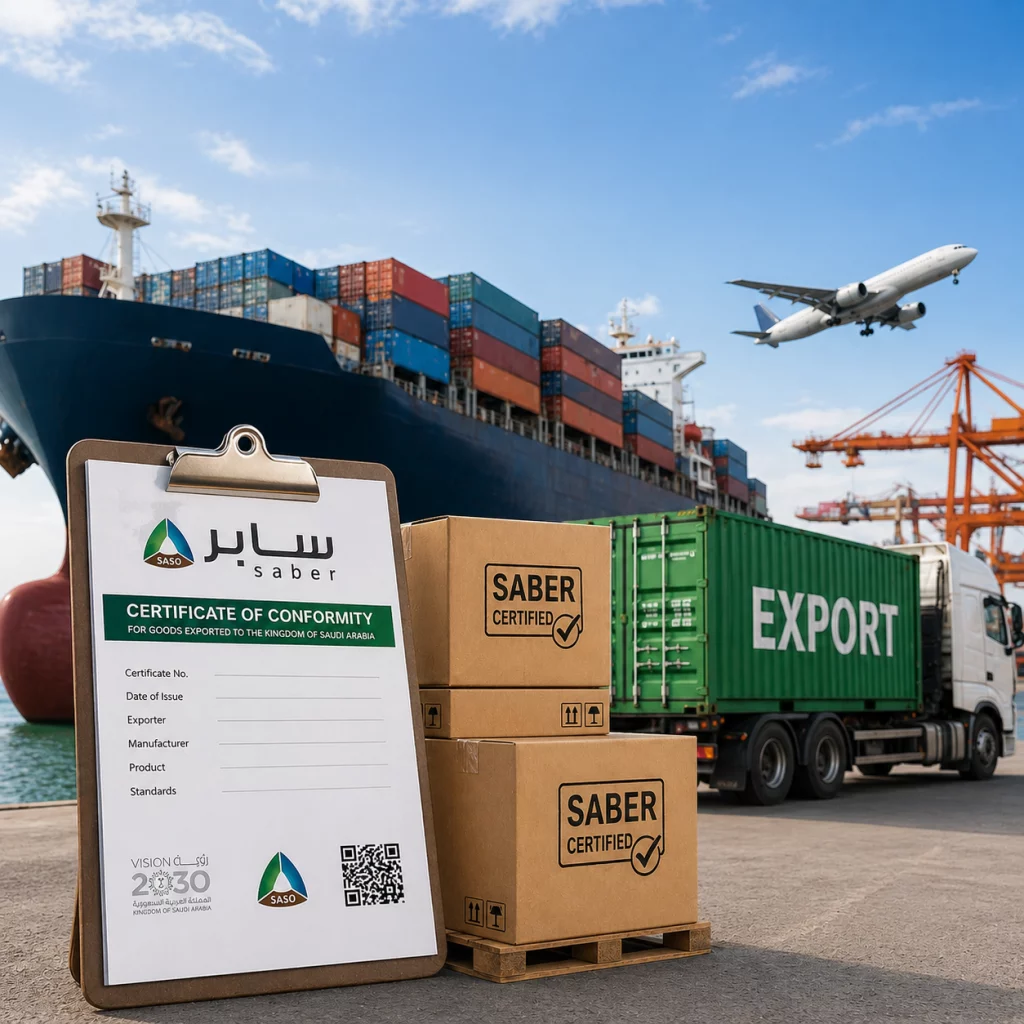
SABER stands for Saudi Product Safety Program. It’s an electronic platform launched by SASO the Saudi Standards, Metrology, and Quality Organization, back in 2019. The Saudi government built it to make sure products entering the Kingdom meet specific safety and quality standards.
Think of it as a digital gatekeeper. Before your goods can clear Saudi customs, SABER has to confirm they’ve been tested, certified, and approved. Without that confirmation, your shipment doesn’t move.
It replaced the old paper-based system, which was slow, inconsistent, and easy to abuse. Today, everything runs through a single digital platform that Saudi customs managed by ZATCA checks in real time via the FASAH electronic gate.
Why Was SABER Introduced?
Saudi Arabia imports enormous volumes of goods every year, including electronics, textiles, food packaging, cosmetics, toys, and more. Before SABER, there was no reliable way to verify whether those products met Saudi safety standards before they arrived in the country.
The result? Substandard and unsafe products were reaching Saudi consumers, retailers, and warehouses regularly.
SABER was Saudi Arabia’s answer to that problem. It shifted the compliance burden to before the shipment departs, not after it arrives. This means if your product isn’t certified, it shouldn’t even be loaded onto the truck or plane.
Does Every Shipment Need SABER Certification?
Not every product, but most of them. SASO divides goods into two categories:
Regulated Products: These require a full Product Certificate of Conformity (PCoC) before shipping. Examples include:
- Electronics and electrical appliances
- Toys and children’s products
- Cosmetics and personal care items
- Textiles and clothing
- Food contact materials (packaging, bottles, containers)
- Tyres and automotive parts
- Building materials
Non-Regulated Products: These don’t need a PCoC, but they still require a Shipment Certificate of Conformity (SCoC) at the point of each export.
So whether your product is regulated or not, some form of SABER documentation is required for every commercial shipment entering Saudi Arabia.
The Two Certificates You Need to Know
1. Product Certificate of Conformity (PCoC)
This is a long-term certificate tied to your specific product. You apply for it once through an approved Conformity Assessment Body (CAB), it gets registered on the SABER platform, and it covers that product for multiple shipments, typically for one year.
Getting a PCoC involves:
- Submitting product technical documentation
- Lab testing (in some cases)
- Review by an accredited CAB
- Registration on the SABER system
Processing time varies; it can take anywhere from a few days to several weeks depending on the product category and how complete your documentation is.
2. Shipment Certificate of Conformity (SCoC)
This is generated per shipment. Every time you export even if your product already has a PCoC you need an SCoC for that specific consignment. It’s linked to your invoice, packing list, and shipment details.
Think of the PCoC as the product approval, and the SCoC as the shipment approval. You need both for regulated goods.
How SABER Affects Your Shipment Timeline
This is where most importers run into problems.
If your SABER certification isn’t in place before your cargo reaches the Saudi border, customs will hold the shipment. Depending on the product category and the issue, your goods could be:
- Delayed held until certification is provided (days to weeks)
- Returned sent back to the UAE at your cost
- Destroyed if the product is deemed non-compliant
For businesses managing cargo from Dubai to Saudi Arabia on tight schedules, especially e-commerce sellers restocking Amazon.sa or Noon warehouses even a three-day customs hold can mean lost sales, storage fees, and damaged supplier relationships.
The lesson: SABER is not something you sort out at the border. It has to be done before the shipment is booked.
Common Mistakes That Cause SABER Delays
Based on what experienced freight forwarders in Dubai see regularly, these are the most common mistakes:
- Assuming your product isn’t regulated. Many importers don’t check the SASO-regulated products list before shipping. If your item turns out to be regulated and you don’t have a PCoC, the shipment stops at the border.
- Missing or mismatched documentation. The product description on your commercial invoice needs to match the SABER certificate exactly. A single discrepancy a different model number, or a slightly different product name can trigger a manual inspection or rejection.
- Expired certificates. PCoCs have expiry dates. If you’re shipping on an old certificate that’s lapsed, SABER won’t recognise it and customs will hold the cargo.
- Last-minute applications. Applying for a PCoC a day before your shipment is booked is a recipe for delays. Some product categories require lab testing, which takes time. Plan at least 2–4 weeks ahead for regulated products you haven’t certified before.
- No SCoC generated for the specific consignment. Even with a valid PCoC, if you haven’t generated the Shipment CoC for that particular invoice, the cargo won’t clear.
How SABER Connects to the Bigger Customs Picture
SABER doesn’t work alone. It connects directly to the FASAH customs platform, which is Saudi Arabia’s official electronic gate for all import processing. When your shipment arrives, customs officers can see in real time whether a valid SCoC exists for that consignment.
If you want to understand the full Saudi import process from customs duties and VAT to required documents, our detailed guide on how to import goods from the UAE to Saudi Arabia covers everything step by step.
One thing worth knowing: UAE exporters who include a valid Certificate of Origin with their shipment may qualify for zero customs duty under the GCC Unified Customs Agreement. Saudi VAT at 15% still applies, but avoiding the standard 5–15% import duty can make a meaningful difference on large shipments.
Who Handles SABER: You or Your Freight Forwarder?
Technically, the importer (the Saudi buyer) is responsible for SABER compliance. But in practice, the process requires documents and product information from the exporter in Dubai.
This is where working with an experienced logistics partner makes a real difference. A good custom clearance company in Dubai will:
- Identify whether your product is regulated before you book the shipment
- Guide you to the right Conformity Assessment Body
- Review your documentation for accuracy before submission
- Generate the SCoC for each shipment and confirm it’s linked to the correct invoice
- Flag expiring certificates before they become a problem
At Fast Ship, SABER assistance is built into our standard process for Dubai to Saudi Arabia cargo. We check compliance before a single box is loaded because dealing with a hold at the Riyadh border is far more expensive than getting the paperwork right in Dubai.
SABER and DDP Shipping: Why They Work Together
If you’re using a DDP service in Dubai (Delivered Duty Paid), SABER compliance becomes part of the end-to-end package. Under DDP, your logistics provider takes full responsibility for customs clearance which includes verifying SABER certificates, generating SCoCs, and ensuring the shipment is cleared at the Saudi border without you having to manage a single document.
For e-commerce sellers and businesses that import regularly, DDP with built-in SABER handling is the cleanest solution. You get a single invoice, no border surprises, and someone who knows the regulations managing the paperwork from pickup to door to door cargo Dubai, all the way to your Saudi destination.
Quick SABER Checklist Before You Ship
Before your next shipment leaves the UAE, run through this:
- Is your product on the SASO-regulated products list?
- Do you have a valid, unexpired PCoC for each regulated product?
- Have you generated an SCoC for this specific shipment?
- Does the product description on your invoice match the SABER certificate exactly?
- Is your Certificate of Origin attached for GCC duty exemption?
- Has your freight forwarder confirmed SABER compliance before booking?
If any box is unchecked, sort it before the shipment moves not after.
Conclusion
SABER certification is mandatory for every commercial shipment entering Saudi Arabia there are no exceptions. Get it wrong, and you’re looking at border holds, return costs, and lost business. If you’re unsure whether your products need certification, or you’ve had issues before, get in touch with Fast Ship. We’ll handle the whole process for you.
Fast Ship is a Dubai-based freight forwarder specialising in UAE-to-Saudi Arabia logistics, including DDP shipping, SABER compliance, customs clearance, and door-to-door delivery across the GCC.