




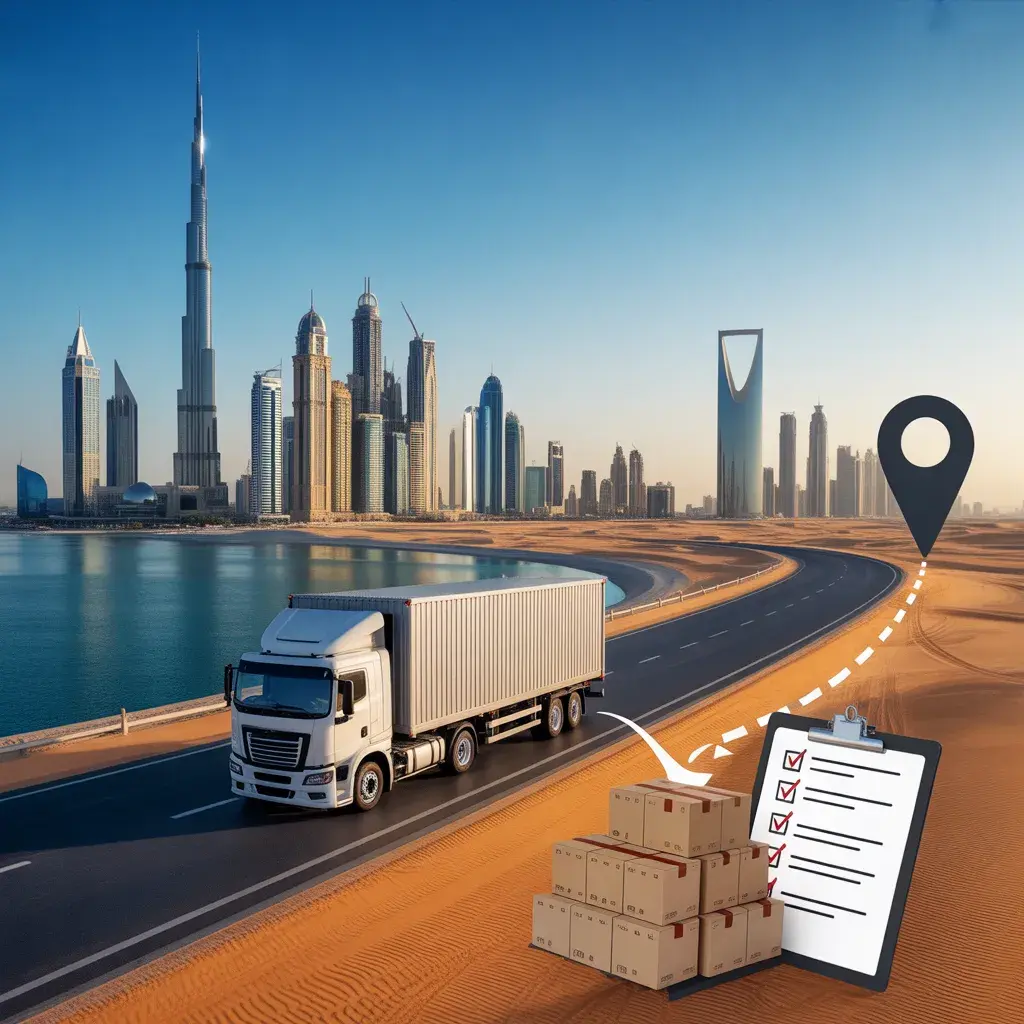
Quick Overview: Choose door-to-door shipping from Dubai to Saudi Arabia by selecting a licensed carrier, verifying customs requirements, preparing accurate documents, and tracking your shipment until delivery.
Shipping goods from Dubai to Saudi Arabia has become increasingly popular due to growing e-commerce, cross-border trade, and personal deliveries. However, navigating Saudi customs, selecting a reliable carrier, and ensuring timely delivery can be challenging.
A client’s 5 kg parcel shipped through FastShip in Dubai reached Qatar safely in just 3 days, demonstrating how choosing the right carrier ensures speed and reliability.
Why Door-to-Door Shipping Matters
Door-to-door shipping means your package is collected from your location in Dubai and delivered directly to the recipient’s address in Saudi Arabia, with minimal involvement from the recipient, making door to door cargo in Dubai a convenient solution for personal and business shipments. Unlike traditional freight forwarding, which stops at ports or airports, door-to-door services handle:
- Customs clearance
- Inland transportation
- Last-mile delivery
This approach saves time, reduces errors, and provides one accountable point of contact. However, not all carriers offer true end-to-end service; according to the cargo shipping market report, some subcontract customs clearance, leading to delays or unexpected fees.
Step 1: Plan Your Shipment Accurately
Proper planning ensures smooth transit and avoids customs rejection. Key steps include:
- Product type & classification: Specify exact items with accurate descriptions and HS codes. Avoid vague terms like “clothing” or “electronics.”
- Weight & dimensions: Include net, gross, and volumetric weight to determine shipping cost and carrier suitability.
- Special requirements: Identify fragile, perishable, or hazardous items. Certain goods, like cosmetics or electronics, require SASO certification.
- Documentation: Prepare commercial invoice (Arabic/English), packing list, and any required permits (SFDA for food/supplements).
Non-compliant documentation is the leading cause of shipment delays in Saudi Arabia.
Step 2: Understand Regulations & Compliance
Saudi Arabia enforces strict import rules:
- VAT & Duties: 15% VAT applies to all shipments; duties vary (0 to 20%) depending on item type and value. Gifts under SAR 1,000 are duty-free but still taxed for VAT.
- SASO Certification: Mandatory for electronics, cosmetics, toys, and certain PPE.
- SFDA Approval: Required for food, supplements, and medical products. Unregistered items may be rejected or destroyed.
For business shipments, provide your customer’s Commercial Registration (CR) or, for personal shipments, the recipient’s national ID/Iqama copy.
Step 3: Track and Manage Your Shipment
A good door-to-door provider offers:
- Real-time tracking (GPS or scan-based)
- Notifications via SMS or email
- Customer support for customs or delivery issues
Always provide a Saudi mobile number (+966) and verify addresses using Absher or Google Maps to avoid failed deliveries.
Step 4: Mitigate Risks and Optimize Costs
- Choose delivered duty paid (DDP) in the UAE to shift customs responsibility to the carrier and ensure hassle-free shipment clearance.
- Consider insurance for high-value or fragile goods.
- Test new carriers with small shipments before scaling up.
- Avoid low-cost providers without customs expertise to prevent hidden fees.
Final Thoughts
Shipping from Dubai to Saudi Arabia door-to-door is more than convenience; it’s about compliance, reliability, and accountability. By planning shipments carefully, choosing licensed carriers, preparing accurate documentation, and adhering to standard shipping package sizes, you can avoid delays, reduce costs, and enhance customer satisfaction. A well-executed door-to-door shipping strategy turns cross-border logistics into a competitive advantage, ensuring every shipment reaches its destination safely and on time.
Why Choose FastShip in Dubai
- Licensed & Compliant: Fully adheres to UAE and Saudi Customs regulations, including DDP clearance.
- End-to-End Service: Pickup, customs handling, and last-mile delivery in one seamless process.
- Transparent Pricing: All fees, including VAT, duties, and delivery, are clearly outlined upfront.
- Real-Time Tracking: GPS and scan updates keep you informed throughout the shipment.
- Expert Support: Guides on documentation, compliance, and insurance for smooth shipping.
Frequently Asked Questions
Q1: Which cargo provider is most reliable in Dubai?
FastShip in Dubai is a trusted option for door-to-door shipments, offering speed, compliance, and end-to-end service.
Q2: Is a certificate of origin required for shipments to Saudi Arabia?
Yes, a certificate of origin is often needed for commercial shipments to Saudi Arabia to ensure customs compliance.
Q3: Who is responsible for paying VAT under DDP delivery?
Under DDP (Delivered Duty Paid), the seller or carrier handles VAT and duties, not the recipient.